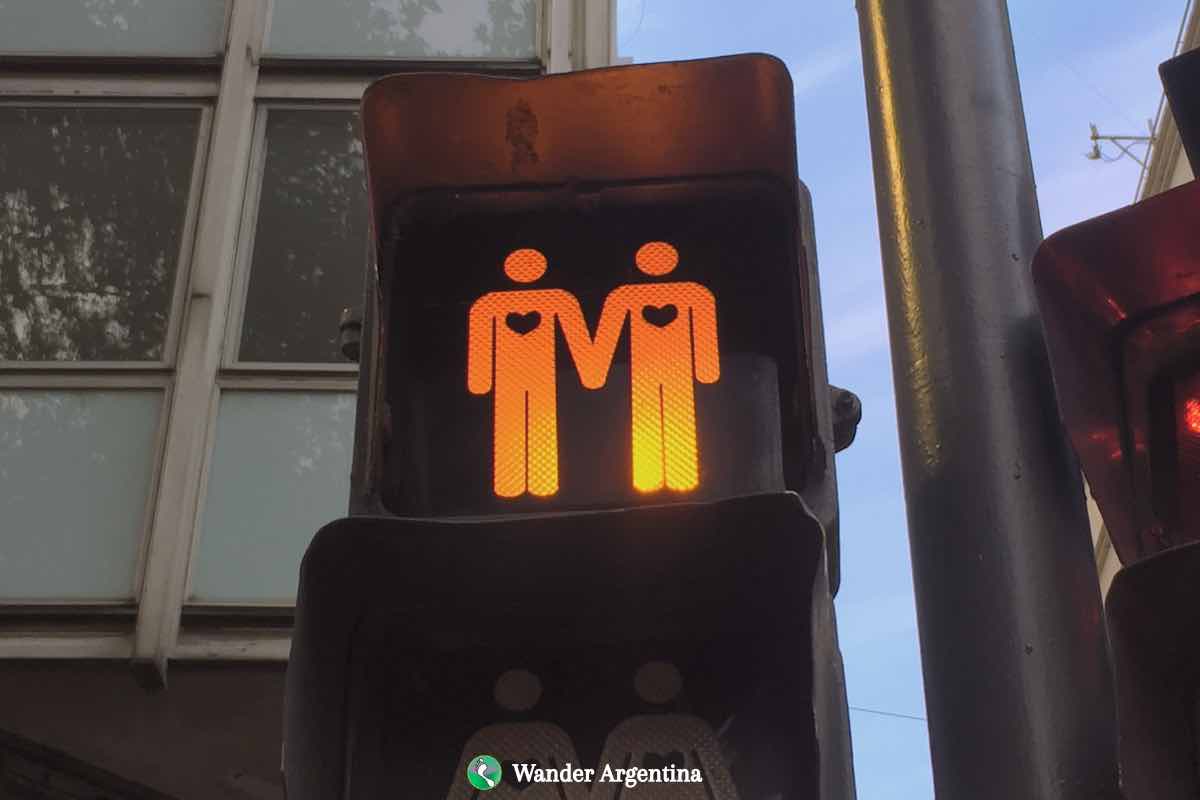
Same sex couples in Argentina have enjoyed legal gay marriage for over 16 years.
The country’s groundbreaking gay marriage law, signed by President Cristina Kirchner on July 21, 2010 was at the time the only of its kind in Latin America.
According to the group, Comunidad Homosexual Argentina (CHA) after two years, 6,000 same sex couples had already married.
Today, there are more than 20,000 married gay couples in Argentina.
Gay Marriage for Foreigners
In 2012 Buenos Aires Mayor Mauricio Macri approved gay marriages between visiting foreigners in the Argentine capital, meaning any gay couple — foreign or mixed-nationality — can be get married here.
Argentina was the world’s tenth country to legalize gay marriage.
Neighboring Uruguay, which has had a civil union law since 2008, later followed suit and passed their own law in 20113.
The Gender Identity Law
In 2012, Argentina law 26,743 became arguably the world’s most progressive ‘gender identity‘ law.
The law does not require any legal or medical approval to change ones gender on their birth certificate and national identity card.
President Kirchner signed the law in June 2012 after a unanimous 55-0 vote in the senate the month prior.
The only outspoken opponents of the law were local leaders of the Catholic Church.
Previously to change one’s gender on official documents in Argentina, one had to submit to a years-long diagnostic and judicial process.
Allowing ‘self declaration’ of one’s gender has brought about problems though.
In 2018, 60-year-old Argentine tax worker Sergio Lazarovich legally changed his gender to female in order to retire five years early, taking advantage of the lower retirement age for women (60) compared to men (65).
The law also requires both the private and public health sector to provide hormone therapy and gender reassignment surgery to patients as part of their coverage.
The Ley de Identidad de Género also allowed minors to officially change their gender identity with parental consent.
Discussions around the Gender Identity Law, particularly for minors, sparked debate in Argentina, with many angry that the public health system provided cosmetic surgery.
The Ongoing Fight to Roll Back Argentina’s Trans Identity Law
As public commentary grew critical of aspects of the law, in early 2025, the government under President Javier Milei issued Decree 62/2025, which amended aspects of the 2012 Gender Identity Law — most notably restricting gender-affirming/sex change healthcare for minors, including surgical interventions and comprehensive hormonal treatments.
The move was criticized by international human rights organizations and LGBTQ+ activists, but is widely supported among average Argentines, especially outside of Buenos Aires.
A Federal Court in Paraná, Argentina declared parts of that decree unconstitutional in April 2025, restoring access to gender-affirming care for minors and upholding the original law’s provisions in that context.
Legislators from have since introduced bills aiming to further amend or restrict elements of the law (such as who can access gender changes or treatment).
The debate about transgender treatment for minors in Argentina is ongoing but to repeal the law would require an act of Congress, a Supreme Court ruling striking it down or a constitutional amendment.
In a related move, the Argentine government under the leadership of Milei, also banned transgender inmates from requesting transfers to women’s prisons and require inmates to be housed in prisons that correspond to their sex.